Phycocyanin is a remarkable pigment found in various cyanobacteria and algae, playing a crucial and multi - faceted role in the aquatic ecosystem. As a phycocyanin supplier, I have had the privilege of delving deep into the science behind this compound and understanding its significance in the underwater world.
Photosynthesis and Energy Conversion
One of the primary roles of phycocyanin in the aquatic ecosystem is its involvement in photosynthesis. Cyanobacteria and certain algae are photosynthetic organisms, and phycocyanin serves as an accessory pigment. While chlorophyll a is the main pigment that captures light energy for photosynthesis, phycocyanin extends the range of light wavelengths that these organisms can utilize. It absorbs light in the orange - red region (around 620 - 630 nm), which chlorophyll a does not absorb efficiently. This allows the organisms containing phycocyanin to thrive in environments where light conditions are sub - optimal for pure chlorophyll - based photosynthesis. For example, in deeper waters where the red and blue light has been filtered out by the water column, phycocyanin - containing organisms can still capture the remaining orange - red light and convert it into chemical energy.


The energy captured by phycocyanin is then transferred to chlorophyll a through a process called resonance energy transfer. This energy is used to drive the synthesis of ATP (adenosine triphosphate) and NADPH (nicotinamide adenine dinucleotide phosphate), which are essential for the Calvin cycle, where carbon dioxide is fixed into organic molecules. In this way, phycocyanin contributes to the primary productivity of the aquatic ecosystem. It enables cyanobacteria and algae to produce organic matter, which forms the base of the food chain in many aquatic environments. Small zooplankton feed on these photosynthetic organisms, and then larger organisms feed on the zooplankton, creating a complex web of energy transfer.
Photoprotection
In addition to its role in photosynthesis, phycocyanin also provides photoprotection to the organisms that contain it. In the aquatic environment, organisms are exposed to high levels of sunlight, which can generate reactive oxygen species (ROS) such as singlet oxygen, superoxide anions, and hydrogen peroxide. These ROS are highly reactive and can damage cellular components such as DNA, proteins, and lipids.
Phycocyanin has antioxidant properties that help to neutralize these ROS. It can scavenge free radicals and prevent oxidative damage to the cells. For instance, the chromophore groups in phycocyanin can donate electrons to the free radicals, stabilizing them and reducing their reactivity. This photoprotective function is especially important for cyanobacteria and algae living in shallow waters or in areas with high sunlight intensity. By protecting the cells from oxidative stress, phycocyanin ensures the survival and growth of these organisms, which in turn maintains the balance of the aquatic ecosystem.
Signaling and Communication
Phycocyanin may also play a role in signaling and communication within the aquatic ecosystem. Some studies suggest that the presence and concentration of phycocyanin in the water can act as a signal for other organisms. For example, the color of the water can change due to the presence of high concentrations of phycocyanin - containing cyanobacteria. This change in color can be detected by other organisms, which may use it as a cue for various behaviors.
In some cases, the color change can indicate the presence of a food source. Zooplankton may be attracted to areas with high phycocyanin concentrations because it is associated with an abundance of photosynthetic organisms. On the other hand, the presence of certain cyanobacteria with high phycocyanin levels can also be a warning signal. Some cyanobacteria produce toxins, and the change in water color due to phycocyanin may alert other organisms to the potential danger.
Nutrient Cycling
Phycocyanin - containing organisms are also important in nutrient cycling within the aquatic ecosystem. During their growth and metabolism, these organisms take up nutrients such as nitrogen, phosphorus, and carbon from the water. When they die, their cells decompose, releasing these nutrients back into the water. This process is known as remineralization.
The decomposition of phycocyanin - containing organisms is facilitated by bacteria and other decomposers. The nutrients released during decomposition are then available for other organisms in the ecosystem. For example, the nitrogen and phosphorus can be taken up by other algae and plants, promoting their growth. This nutrient cycling is essential for maintaining the productivity and balance of the aquatic ecosystem.
As a Product in the Market
As a phycocyanin supplier, I am well - aware of the various forms of phycocyanin available in the market. C Phycocyanin is a common type, which is widely used in research and in the food and beverage industry. It has a characteristic blue color and is known for its high purity and stability.
Blue Phycocyanin is another popular product. It is often used as a natural food coloring due to its vibrant blue hue. It is also valued for its health benefits, such as its antioxidant and anti - inflammatory properties.
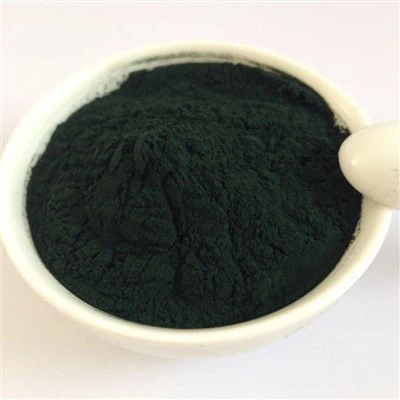
Phycocyanin Powder is a convenient form for both industrial and consumer use. It can be easily added to various products, including supplements, smoothies, and cosmetics.
Conclusion and Call to Action
The role of phycocyanin in the aquatic ecosystem is diverse and significant. It contributes to photosynthesis, provides photoprotection, may be involved in signaling, and plays a crucial part in nutrient cycling. Understanding these roles not only helps us to appreciate the complexity of the aquatic ecosystem but also has practical implications for various industries.
If you are interested in purchasing high - quality phycocyanin products for your research, food, beverage, or cosmetic applications, I encourage you to reach out for a procurement discussion. We are committed to providing you with the best phycocyanin products that meet your specific needs.
References
- Bryant, D. A., & Frigaard, N. U. (2006). Prokaryotic photosynthesis and phototrophy illuminated. Trends in Microbiology, 14(11), 488 - 496.
- Huisman, J., Matthijs, H. C. P., & Visser, P. M. (1999). Light limitation of cyanobacterial dominance in lakes. Limnology and Oceanography, 44(7), 1636 - 1645.
- Li, Y., & Gao, K. (2004). Photoprotective mechanisms in the red alga Porphyra yezoensis under different light conditions. Journal of Experimental Botany, 55(402), 1979 - 1987.
- Paerl, H. W., & Otten, T. G. (2013). Harmful cyanobacterial blooms: causes, consequences, and controls. Microbial Ecology, 65(4), 995 - 1010.