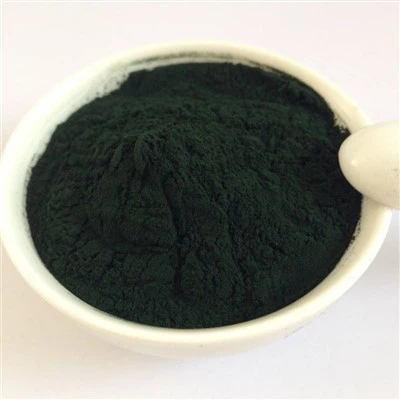
Spirulina, a blue-green alga, has gained significant attention in recent years due to its high nutritional value and potential health benefits. As a leading spirulina supplier, I am often asked about the fascinating process of how spirulina photosynthesizes. In this blog, I will delve into the science behind spirulina photosynthesis, exploring the key components involved and the significance of this process for the growth and production of this remarkable organism.
The Basics of Photosynthesis
Photosynthesis is a fundamental biological process by which green plants, algae, and some bacteria convert light energy from the sun into chemical energy stored in glucose. This process is essential for life on Earth, as it provides the primary source of energy for most living organisms and plays a crucial role in the carbon cycle.
The overall equation for photosynthesis can be summarized as follows:


6 CO₂ + 6 H₂O + light energy → C₆H₁₂O₆ + 6 O₂
In this equation, carbon dioxide (CO₂) and water (H₂O) are the reactants, while glucose (C₆H₁₂O₆) and oxygen (O₂) are the products. The light energy required for this reaction is absorbed by pigments such as chlorophyll, which are located in the chloroplasts of plant cells or the photosynthetic membranes of algae and bacteria.
Photosynthesis in Spirulina
Spirulina is a photosynthetic organism that belongs to the cyanobacteria group, also known as blue-green algae. Unlike plants, spirulina does not have specialized organelles such as chloroplasts. Instead, its photosynthetic machinery is embedded in the thylakoid membranes, which are flattened sacs within the cell.
The process of photosynthesis in spirulina can be divided into two main stages: the light-dependent reactions and the light-independent reactions, also known as the Calvin cycle.
Light-Dependent Reactions
The light-dependent reactions take place in the thylakoid membranes and require light energy to generate ATP (adenosine triphosphate) and NADPH (nicotinamide adenine dinucleotide phosphate), which are energy-rich molecules used in the Calvin cycle.
The first step in the light-dependent reactions is the absorption of light by pigments such as chlorophyll a, phycocyanin, and allophycocyanin. These pigments are organized into light-harvesting complexes, which capture light energy and transfer it to the reaction centers.
At the reaction centers, the absorbed light energy is used to excite electrons from water molecules. This process, known as photolysis, releases oxygen as a byproduct and generates protons (H⁺) and electrons.
The excited electrons are then passed through an electron transport chain, which consists of a series of protein complexes and electron carriers. As the electrons move through the chain, they release energy, which is used to pump protons across the thylakoid membrane, creating a proton gradient.
The proton gradient drives the synthesis of ATP through a process called chemiosmosis. ATP synthase, an enzyme located in the thylakoid membrane, uses the energy from the proton gradient to convert ADP (adenosine diphosphate) and inorganic phosphate (Pi) into ATP.
In addition to ATP, the light-dependent reactions also generate NADPH. The electrons from the electron transport chain are used to reduce NADP⁺ (nicotinamide adenine dinucleotide phosphate) to NADPH, which is a reducing agent used in the Calvin cycle.
Light-Independent Reactions (Calvin Cycle)
The light-independent reactions, or the Calvin cycle, take place in the stroma of the thylakoid membranes and do not require light energy directly. Instead, they use the ATP and NADPH generated in the light-dependent reactions to convert carbon dioxide into glucose.
The Calvin cycle consists of three main stages: carbon fixation, reduction, and regeneration of the acceptor molecule.
- Carbon Fixation: The first step in the Calvin cycle is the fixation of carbon dioxide. A molecule of carbon dioxide is combined with a five-carbon molecule called ribulose bisphosphate (RuBP) to form a six-carbon intermediate, which immediately breaks down into two molecules of 3-phosphoglycerate (3-PGA). This reaction is catalyzed by the enzyme ribulose bisphosphate carboxylase/oxygenase (Rubisco).
- Reduction: In the reduction stage, the 3-PGA molecules are phosphorylated by ATP and reduced by NADPH to form glyceraldehyde 3-phosphate (G3P). Some of the G3P molecules are used to synthesize glucose, while the rest are used to regenerate RuBP.
- Regeneration of RuBP: The final stage of the Calvin cycle is the regeneration of RuBP. The remaining G3P molecules are rearranged and phosphorylated to form RuBP, which can then be used to fix more carbon dioxide.
Factors Affecting Spirulina Photosynthesis
Several factors can affect the rate of photosynthesis in spirulina, including light intensity, temperature, carbon dioxide concentration, and nutrient availability.
- Light Intensity: Light is the primary source of energy for photosynthesis, and the rate of photosynthesis increases with increasing light intensity up to a certain point. However, if the light intensity is too high, it can cause photoinhibition, which reduces the efficiency of photosynthesis.
- Temperature: Photosynthesis is a temperature-dependent process, and the optimal temperature for spirulina photosynthesis is between 30°C and 35°C. At temperatures below or above this range, the rate of photosynthesis decreases.
- Carbon Dioxide Concentration: Carbon dioxide is one of the reactants in photosynthesis, and the rate of photosynthesis increases with increasing carbon dioxide concentration up to a certain point. However, if the carbon dioxide concentration is too high, it can cause carbon dioxide toxicity, which reduces the efficiency of photosynthesis.
- Nutrient Availability: Spirulina requires a variety of nutrients, including nitrogen, phosphorus, potassium, and trace elements, for growth and photosynthesis. The availability of these nutrients can affect the rate of photosynthesis and the overall health of the spirulina culture.
Significance of Spirulina Photosynthesis
The photosynthetic process in spirulina is not only essential for its growth and survival but also has significant implications for human health and the environment.
- Nutritional Value: Spirulina is a rich source of protein, vitamins, minerals, and antioxidants, making it a valuable nutritional supplement. The photosynthetic process in spirulina allows it to synthesize these nutrients from carbon dioxide, water, and sunlight, making it a sustainable and environmentally friendly source of nutrition.
- Environmental Benefits: Spirulina is a highly efficient photosynthetic organism that can convert carbon dioxide into biomass at a much higher rate than most plants. This makes it a potential tool for carbon sequestration and the mitigation of climate change. In addition, spirulina can be grown in wastewater, which helps to reduce water pollution and recycle nutrients.
- Industrial Applications: Spirulina has a wide range of industrial applications, including the production of food supplements, animal feed, cosmetics, and biofuels. The photosynthetic process in spirulina allows it to produce high-quality biomass that can be used for these applications, making it a valuable resource for the biotechnology industry.
Conclusion
As a spirulina supplier, I am constantly amazed by the incredible process of photosynthesis in this remarkable organism. The ability of spirulina to convert light energy into chemical energy through photosynthesis is not only essential for its growth and survival but also has significant implications for human health and the environment.
If you are interested in learning more about spirulina or are considering purchasing Feed Grade Spirulina, Best Organic Spirulina Powder, or Best Organic Spirulina, please feel free to contact me. I would be happy to answer any questions you may have and provide you with more information about our products and services.
References
- Allen, M. M. (1984). Growth of microalgae. In Algal Physiology and Biochemistry (pp. 235-259). University of California Press.
- Bryant, D. A., & Frigaard, N. U. (2006). Prokaryotic photosynthesis and phototrophy illuminated. Trends in Microbiology, 14(11), 488-496.
- Chen, F., & Zhang, Y. (1997). High cell density cultures of microalgae for commercial production. Trends in Biotechnology, 15(11), 489-496.
- Richmond, A. (ed.). (2004). Handbook of microalgal culture: Biotechnology and applied phycology. Blackwell Publishing.